Palestinian Arabic Voices
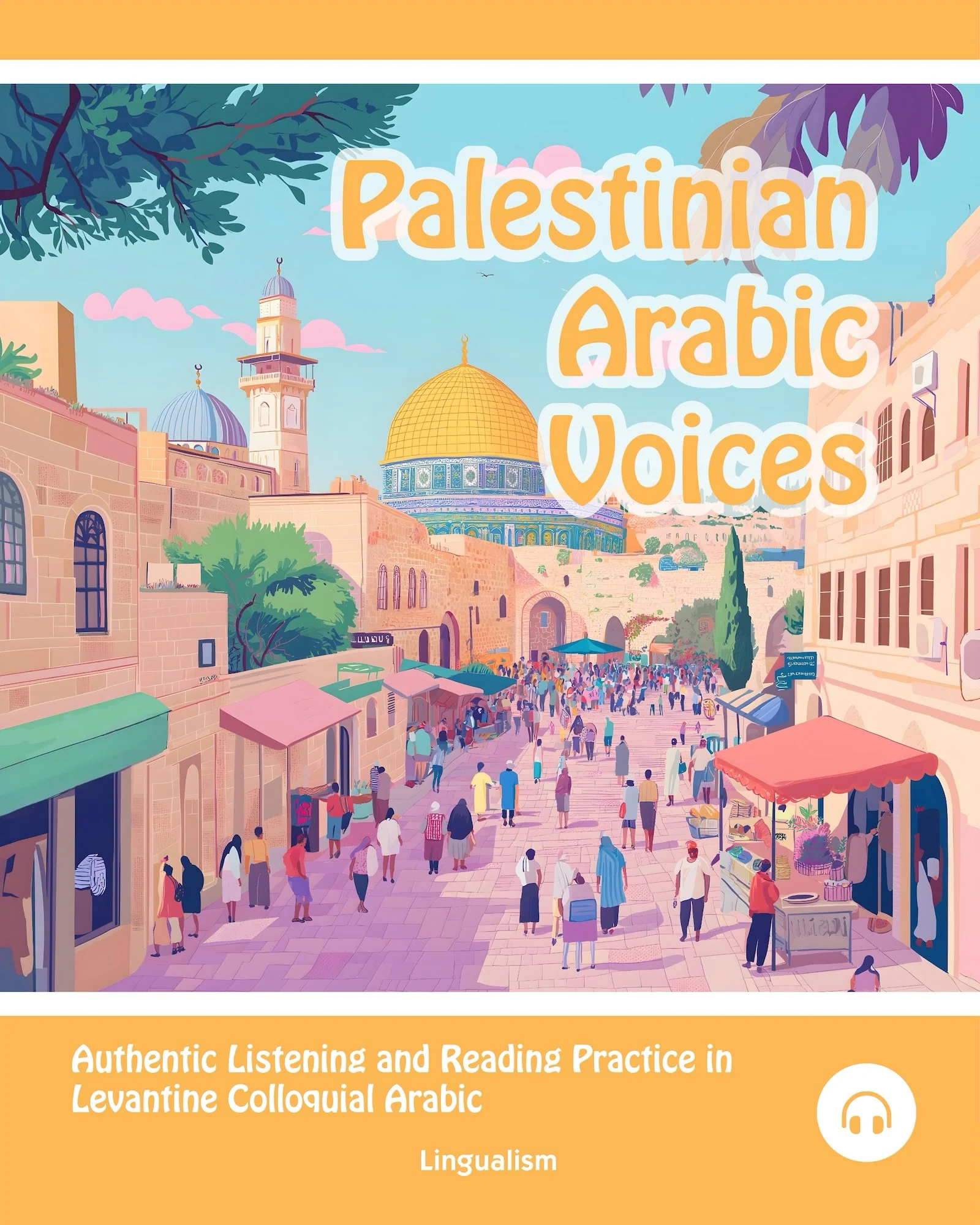
This eBook offers authentic listening and reading practice in real Palestinian Arabic.
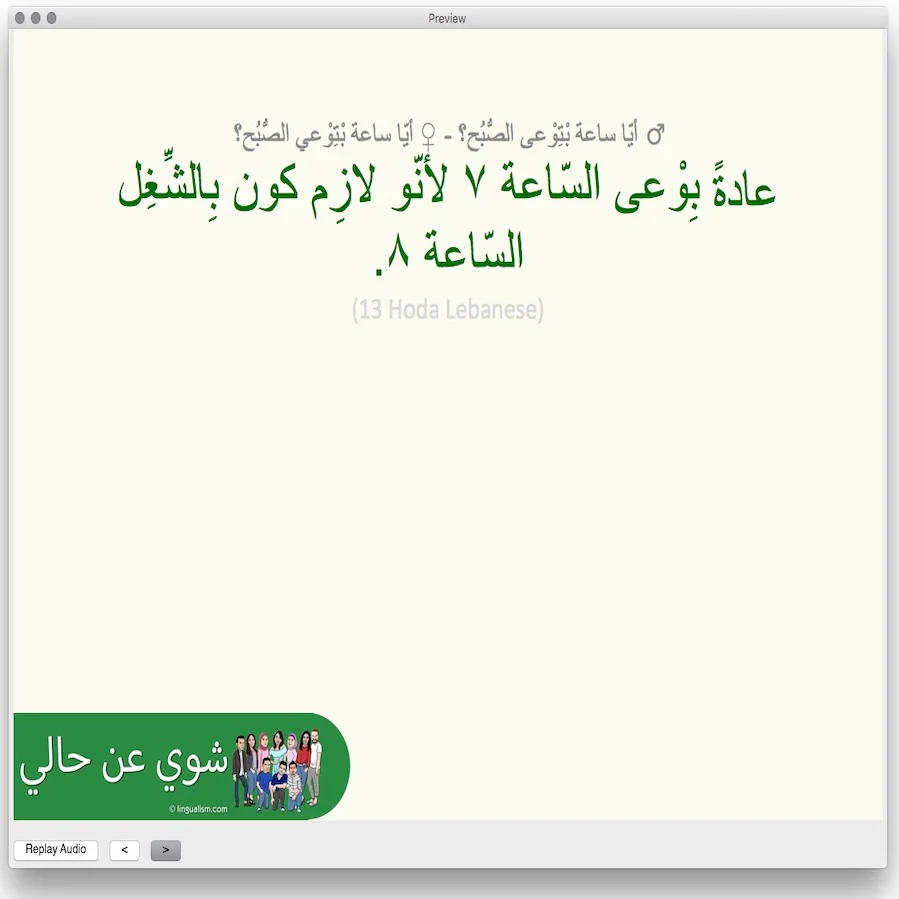
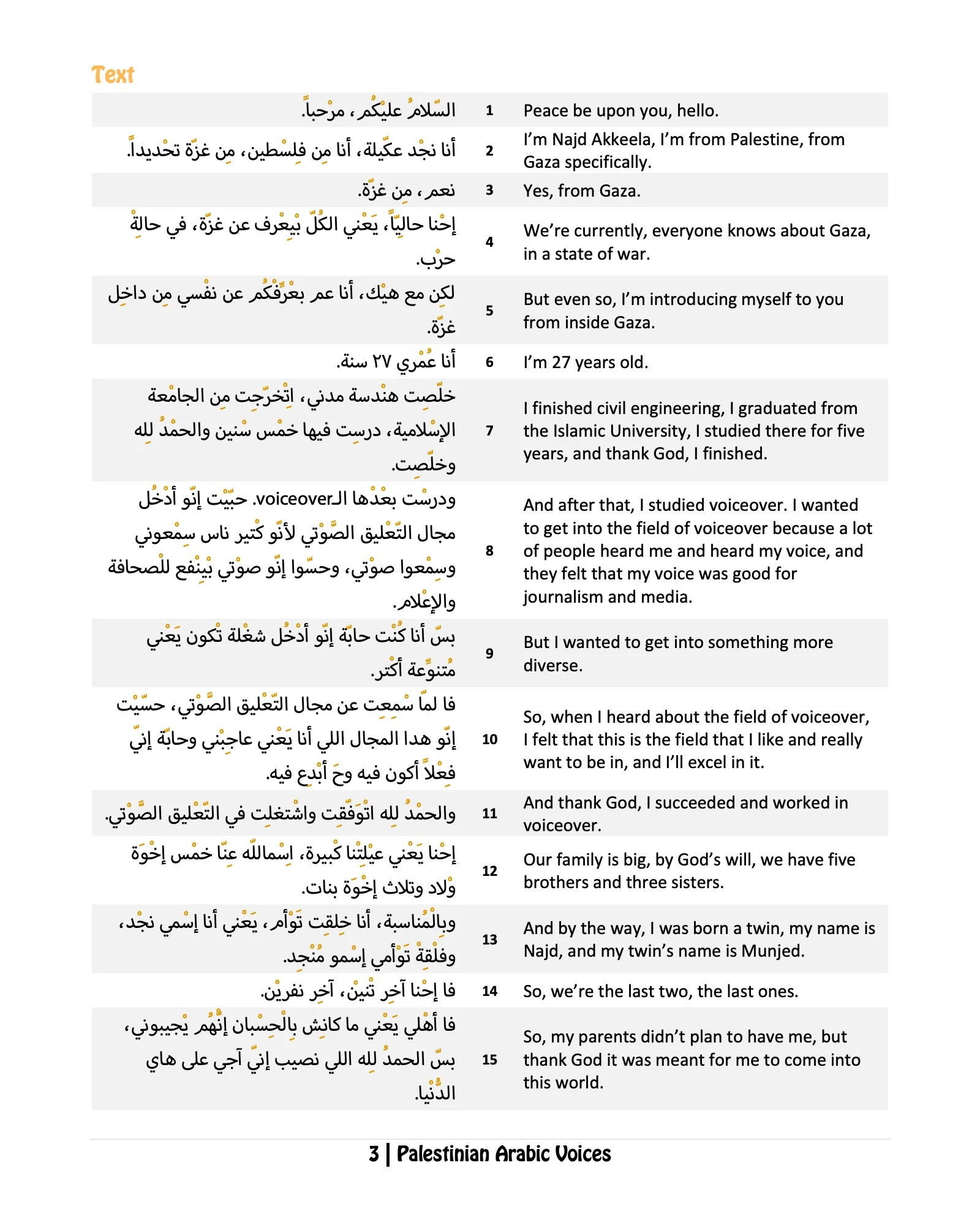
Built around spontaneous audio essays recorded by native speakers of Palestinian Colloquial Arabic, this eBook exposes you to natural speech rather than scripted recordings. Speakers talk freely instead of reading prepared texts, allowing you to hear real features of spoken language such as fillers, self-correction, and variable pacing. A structured methodology encourages you to grasp the overall meaning first, then move on to detailed analysis using the text and translations.
What’s inside
- 36 authentic audio essays spoken spontaneously by Palestinian speakers.
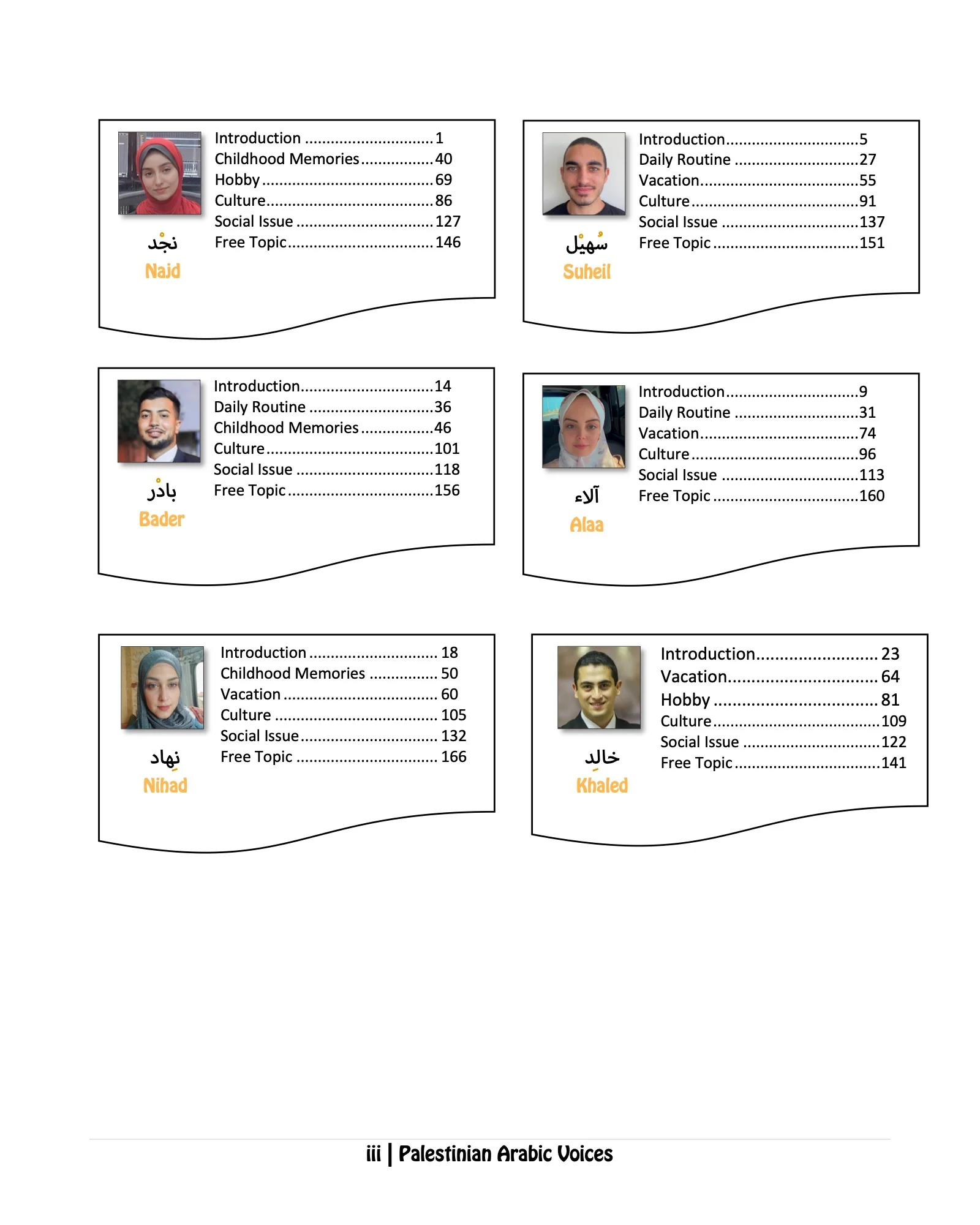
- Contributions from six speakers with diverse regional perspectives.
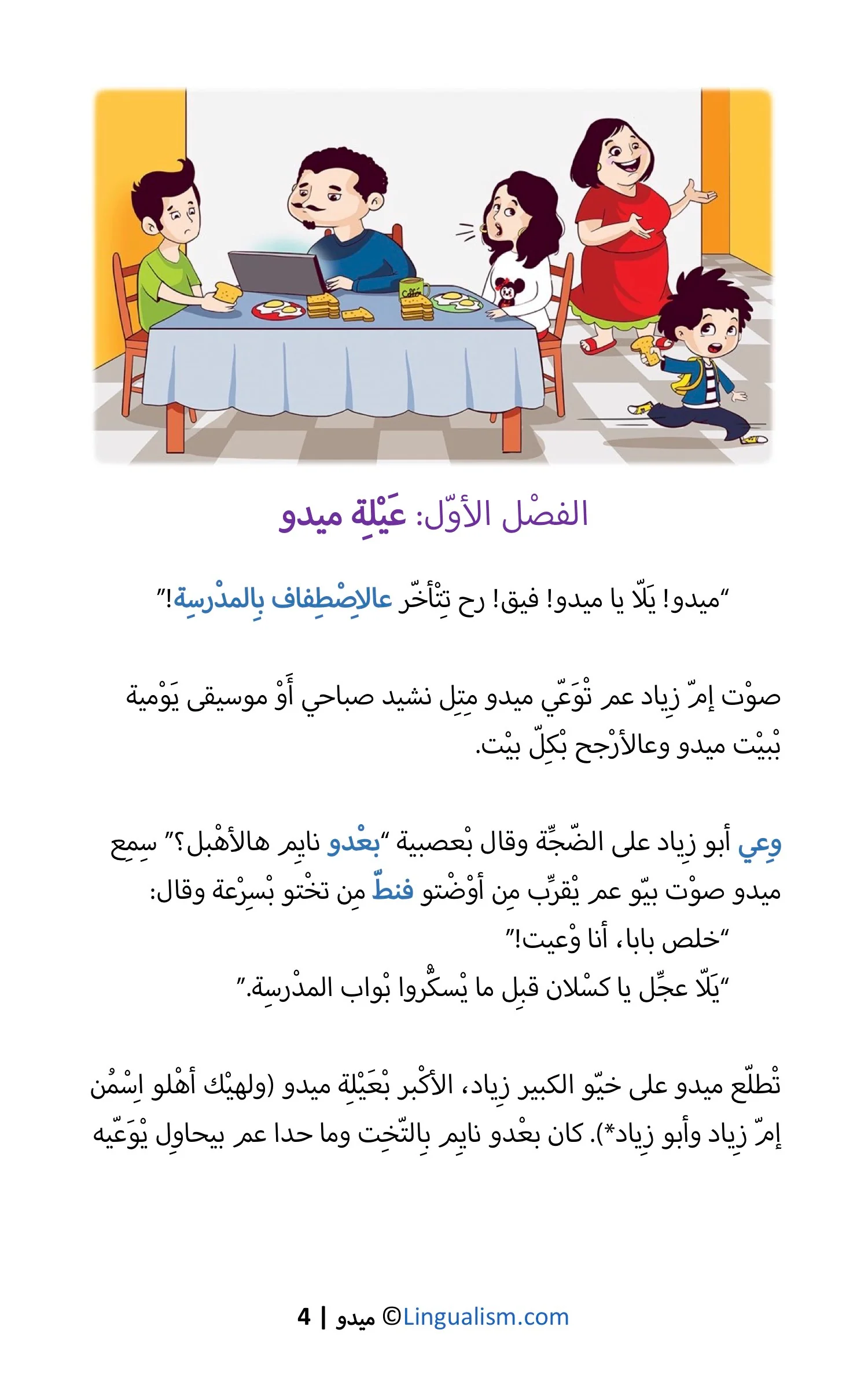
- Arabic script transcriptions with diacritics.
- Direct English translations arranged for flexible study.
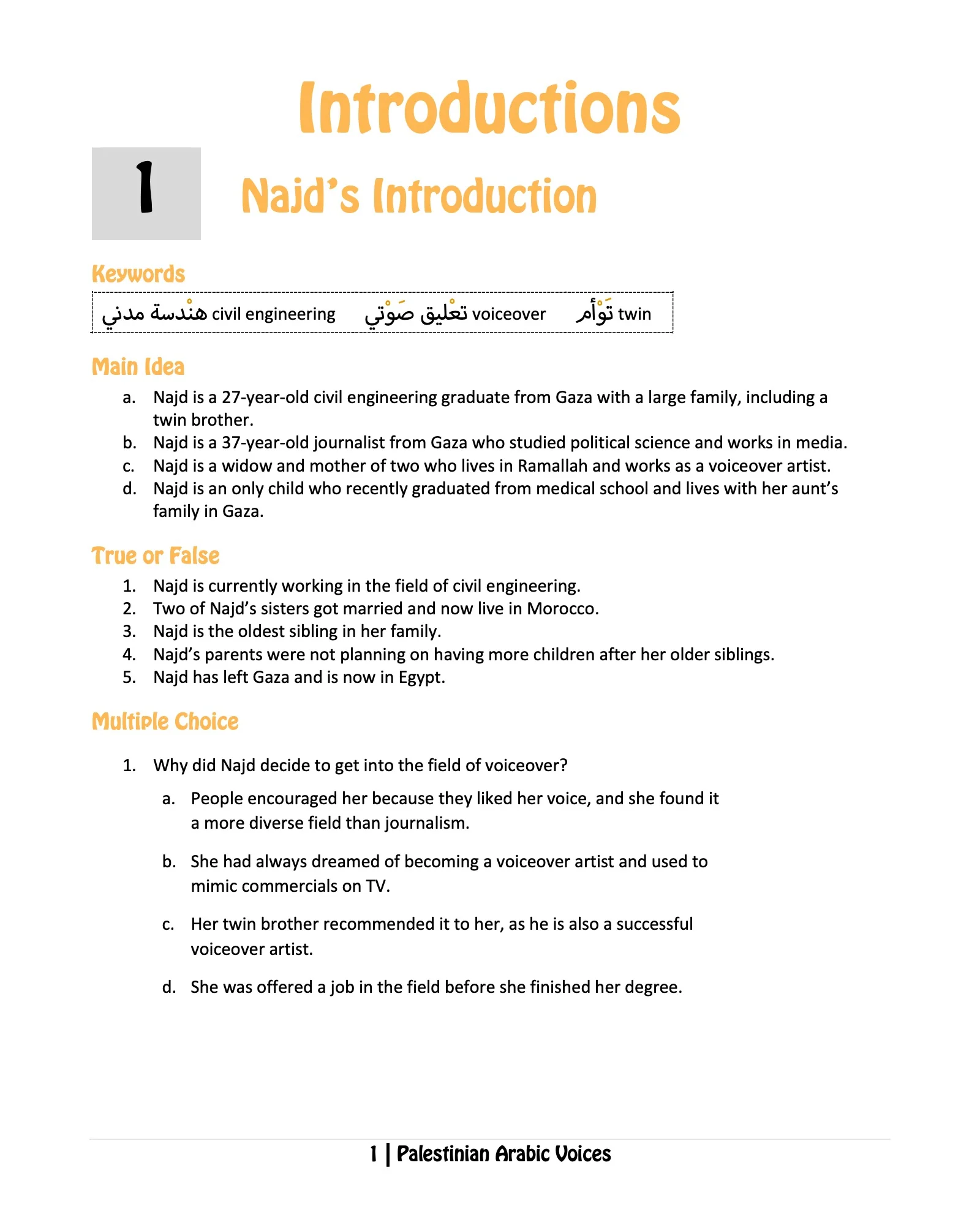
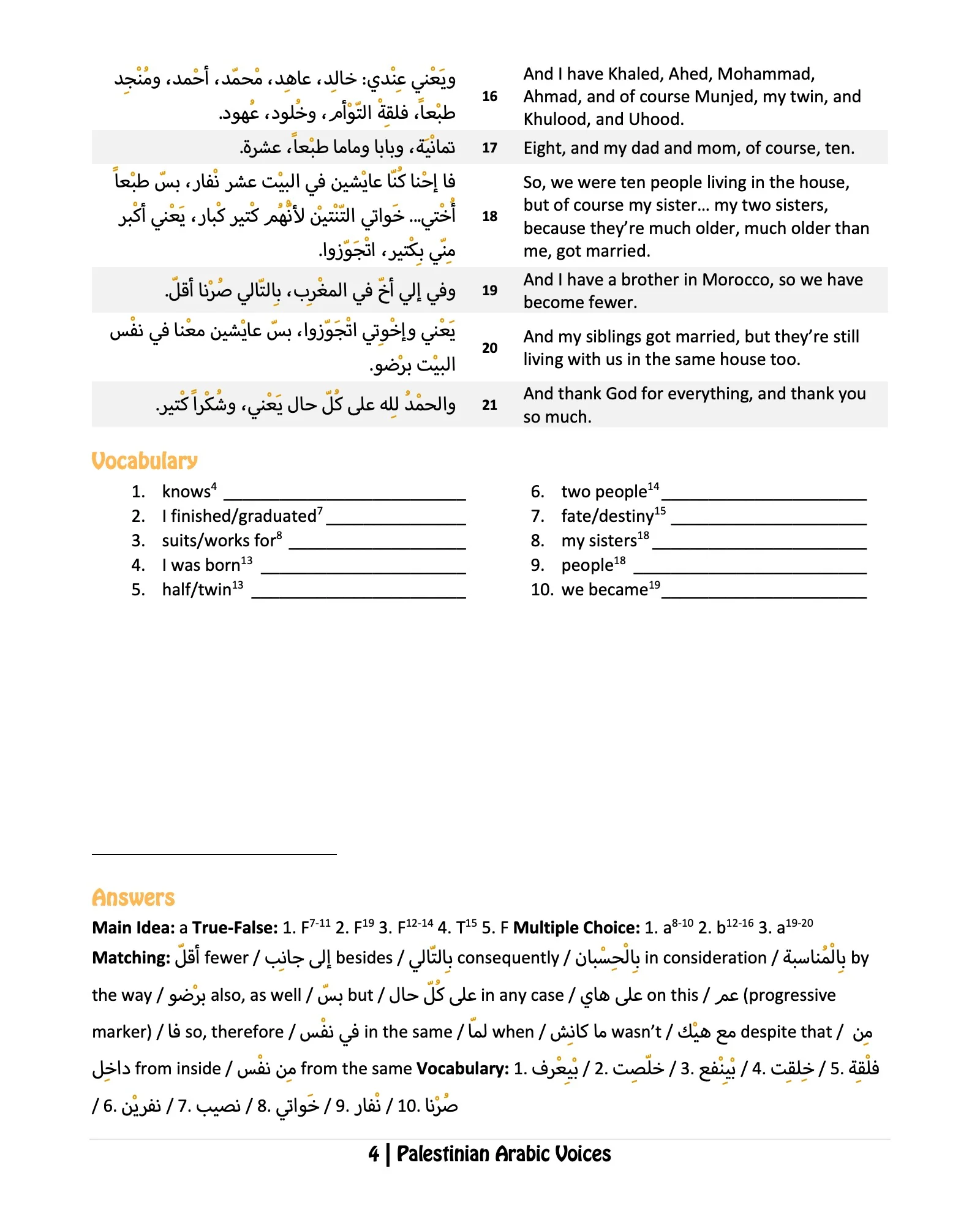
- Guided comprehension exercises for every segment.
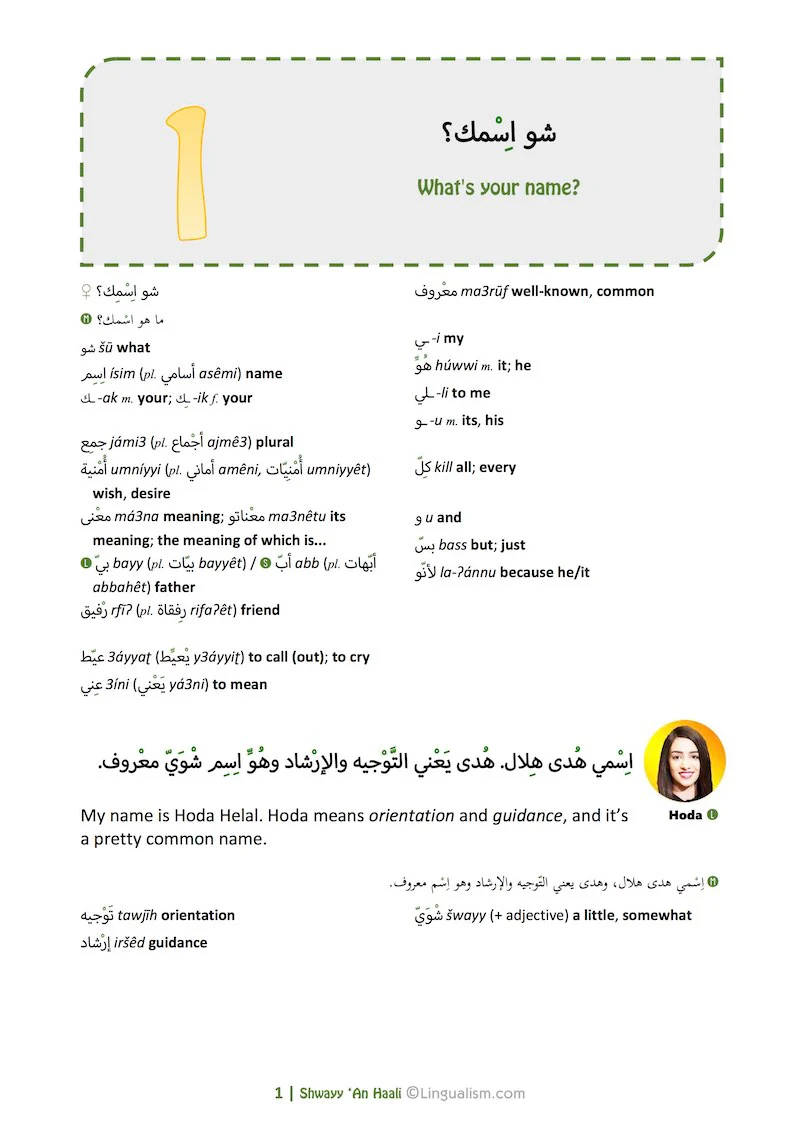
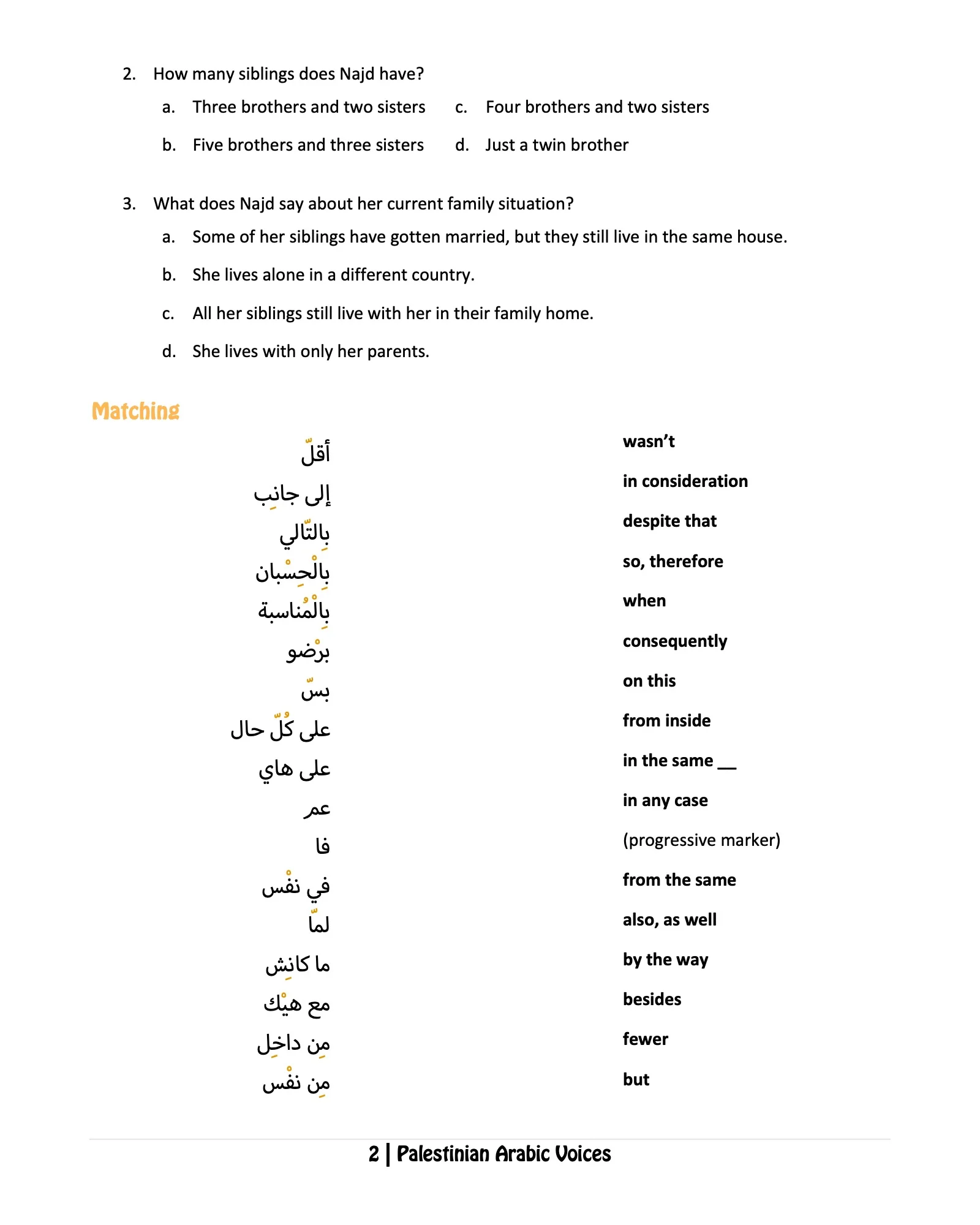
- Keyword lists and vocabulary focused on content words.
- Linguistic markers highlighting natural speech phenomena.
Who it’s for: Intermediate and advanced learners of Levantine Arabic, including learners transitioning from Modern Standard Arabic.
Audio: Audio for all content is available to download or stream below.
Use this eBook to bridge the gap between classroom Arabic and real-world spoken Palestinian Arabic.
Product Information
Product Information
Shipping & Returns
Shipping & Returns
Palestinian Arabic Voices
Palestinian Arabic Voices
This eBook offers authentic listening and reading practice in real Palestinian Arabic.
Built around spontaneous audio essays recorded by native speakers of Palestinian Colloquial Arabic, this eBook exposes you to natural speech rather than scripted recordings. Speakers talk freely instead of reading prepared texts, allowing you to hear real features of spoken language such as fillers, self-correction, and variable pacing. A structured methodology encourages you to grasp the overall meaning first, then move on to detailed analysis using the text and translations.
What’s inside
- 36 authentic audio essays spoken spontaneously by Palestinian speakers.
- Contributions from six speakers with diverse regional perspectives.
- Arabic script transcriptions with diacritics.
- Direct English translations arranged for flexible study.
- Guided comprehension exercises for every segment.
- Keyword lists and vocabulary focused on content words.
- Linguistic markers highlighting natural speech phenomena.
Who it’s for: Intermediate and advanced learners of Levantine Arabic, including learners transitioning from Modern Standard Arabic.
Audio: Audio for all content is available to download or stream below.
Use this eBook to bridge the gap between classroom Arabic and real-world spoken Palestinian Arabic.
Product Information
Product Information
Shipping & Returns
Shipping & Returns
Description
This eBook offers authentic listening and reading practice in real Palestinian Arabic.
Built around spontaneous audio essays recorded by native speakers of Palestinian Colloquial Arabic, this eBook exposes you to natural speech rather than scripted recordings. Speakers talk freely instead of reading prepared texts, allowing you to hear real features of spoken language such as fillers, self-correction, and variable pacing. A structured methodology encourages you to grasp the overall meaning first, then move on to detailed analysis using the text and translations.
What’s inside
- 36 authentic audio essays spoken spontaneously by Palestinian speakers.
- Contributions from six speakers with diverse regional perspectives.
- Arabic script transcriptions with diacritics.
- Direct English translations arranged for flexible study.
- Guided comprehension exercises for every segment.
- Keyword lists and vocabulary focused on content words.
- Linguistic markers highlighting natural speech phenomena.
Who it’s for: Intermediate and advanced learners of Levantine Arabic, including learners transitioning from Modern Standard Arabic.
Audio: Audio for all content is available to download or stream below.
Use this eBook to bridge the gap between classroom Arabic and real-world spoken Palestinian Arabic.